

Nuclear Reaction Group
Brief Introduction
Nuclear Reaction Group is currently focusing its attention on four aspects of multi-nucleon transfer reaction, astrophysical nuclear reaction, radioactive decay of exotic nuclei, and nuclear reaction mechanism in heavy ion driven fusion. We perform research at the Radioactive Beam Line in Lanzhou (RIBLL1), Spectrometer for Heavy Atoms and Nuclear Structure (SHANS), 320-kV platform, High Intensity heavy-ion Accelerator Facility (HIAF) and other facilities around the world.
Study of multi-nucleon transfer reactions: we are planning to design and construct the spectrometer for the neutron-rich superheavy nuclide produced by multi-nucleon transfer reactions of the heavy actinide nuclei. This equipment is used to explore the island of stability" at HIAF.
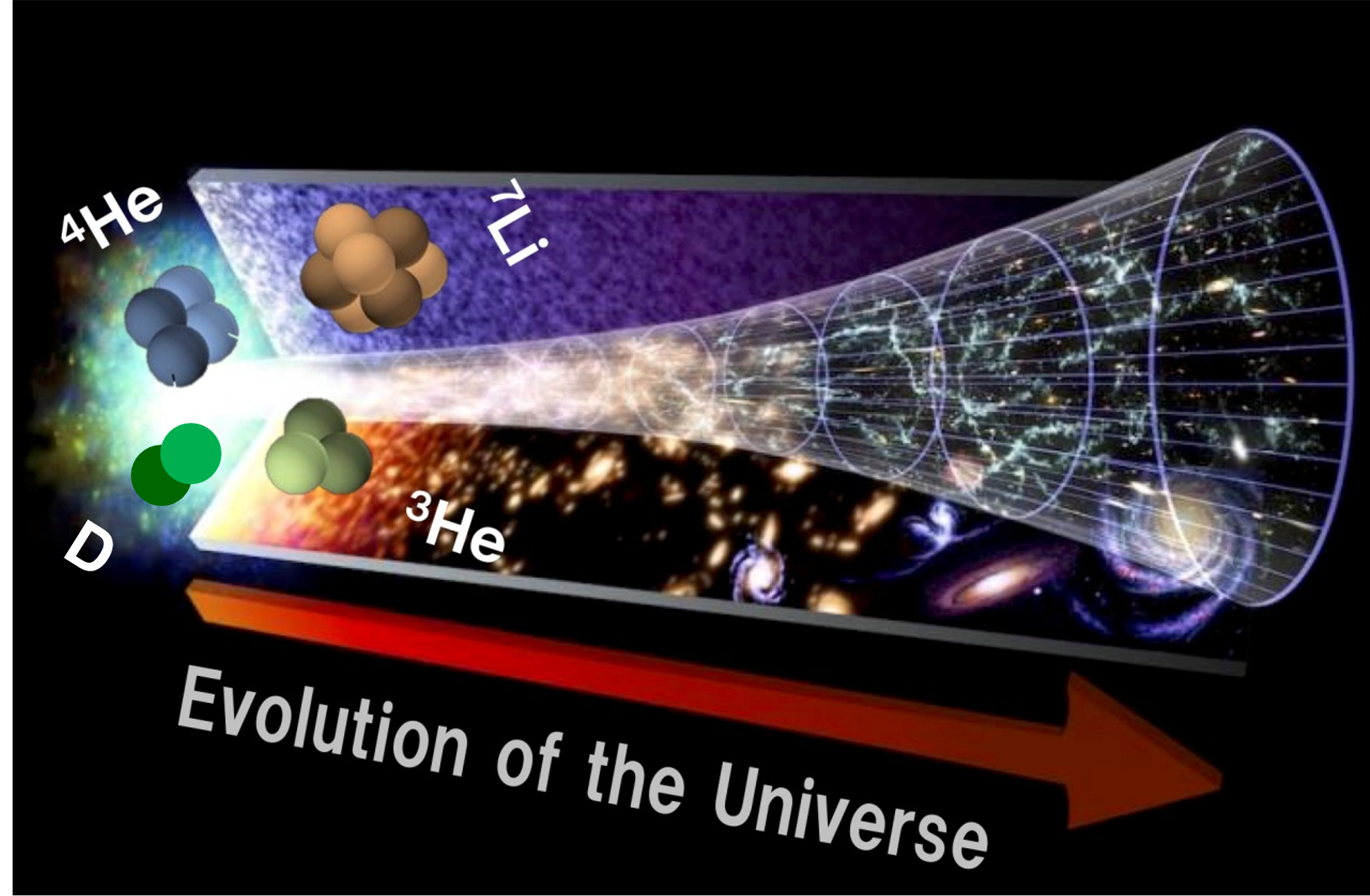
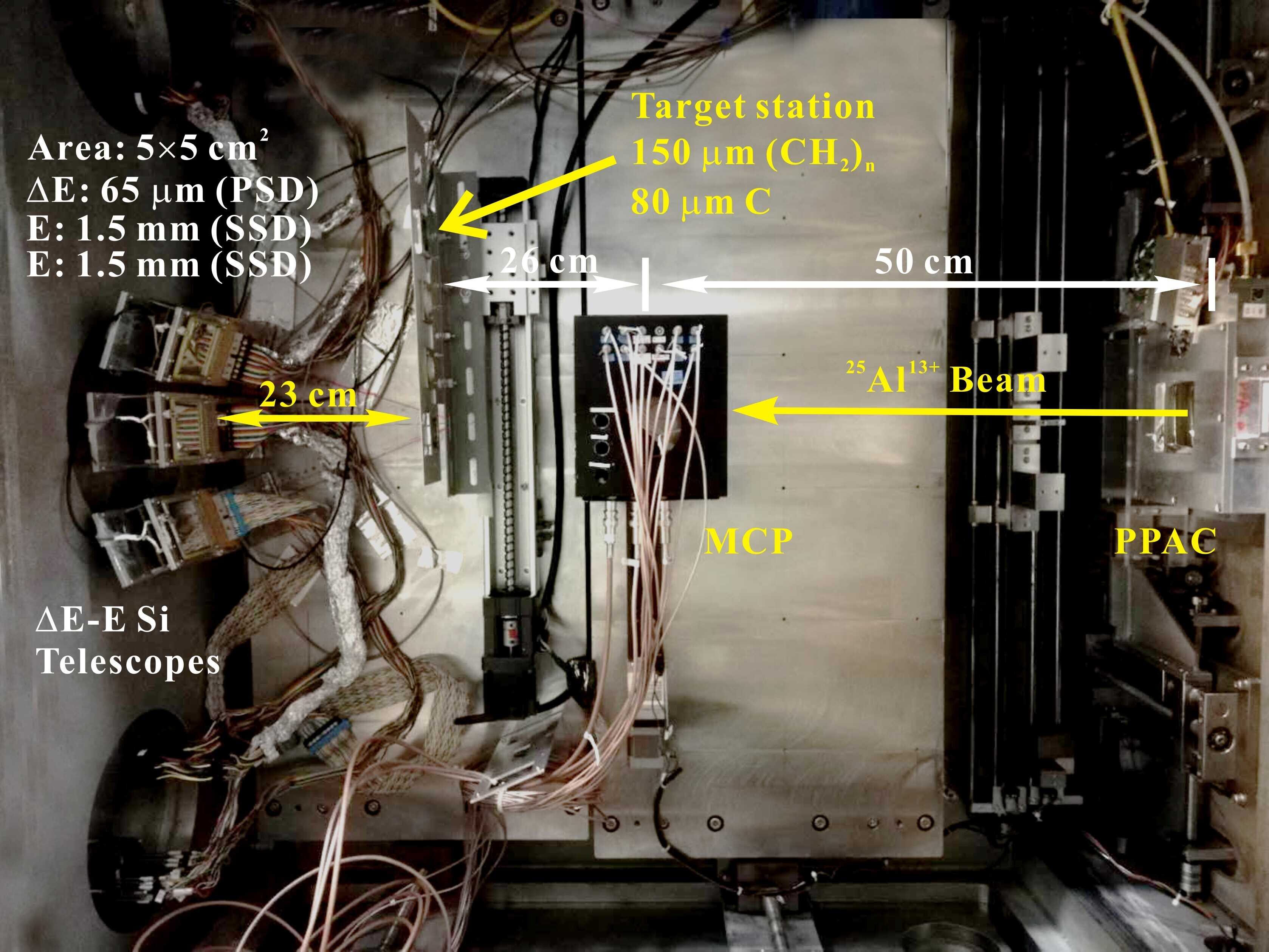
Study of astrophysical nuclear reactions: we aim at the understanding of the crucial reactions that occur in explosive scenarios such as novae and X-ray bursts. We have considerable experience in the construction of silicon detector arrays, in the use of gas targets, in experiments with radioactive beams relevant to astrophysics. Our theoretical research focuses on the nucleosynthesis processes occurred in the different astrophysical scenario, such as Big Bang, and explosive binary systems, which are used to explain the origin of elements and energy generation in stars by nuclear physics.
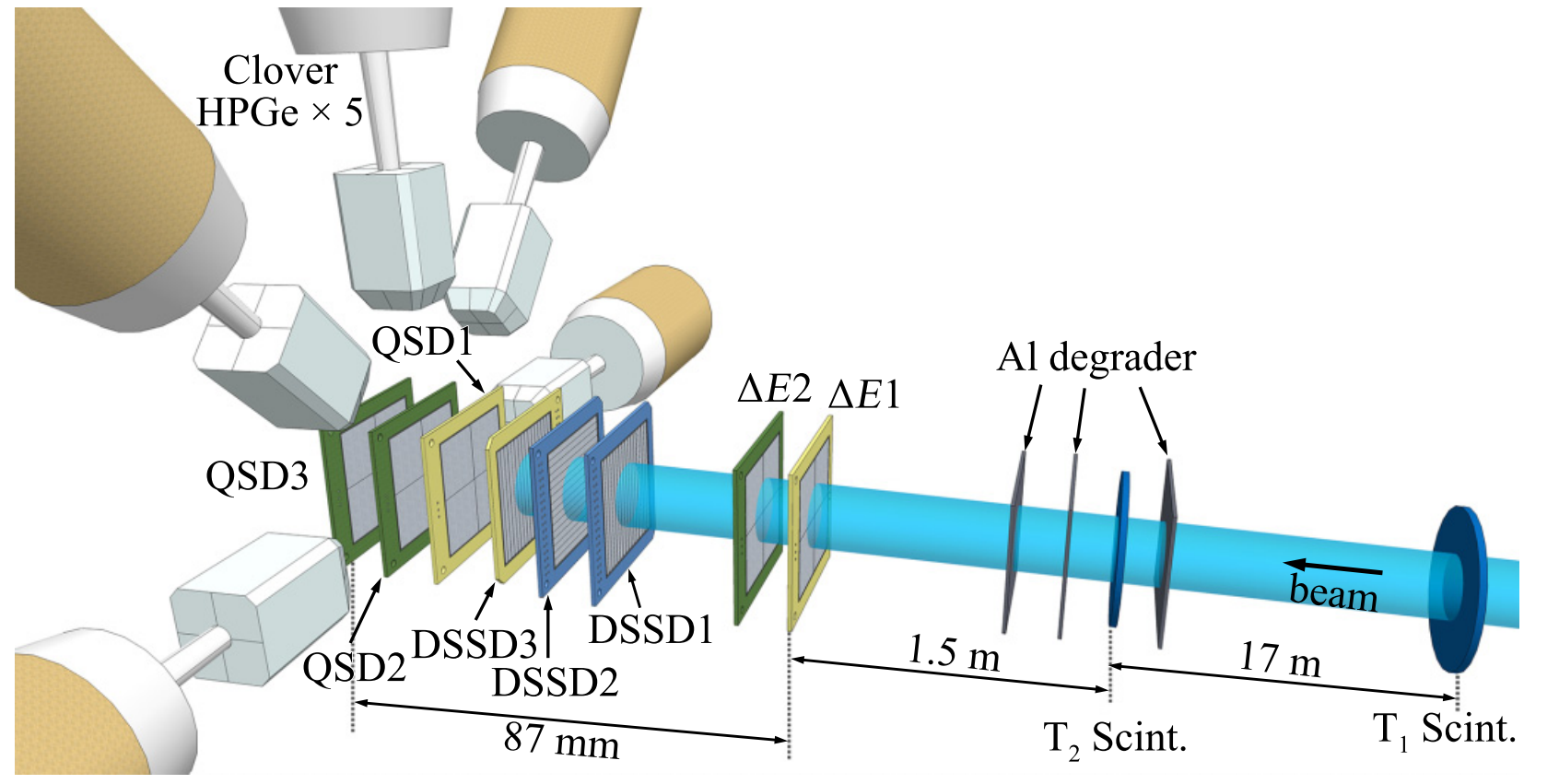
Study of radioactive decay of exotic nuclei: we study the fundamental properties of atomic nuclei, by performing precision measurements of radioactive decays, such as new alpha-emitters or p-emitters. Meanwhile, the state-of-the-art silicon detector arrays developed by our team were used to measure the spectroscopy of exotic nuclei around the proton drip line at the Heavy Ion Research Facility in Lanzhou (HIRFL). This provides the opportunity to address fundamental questions about astrophysical processes, exotic nuclear structures and isospin symmetries.
Study of nuclear reaction mechanism in heavy ion driven fusion: Aligned with the major strategic needs for controllable nuclear fusion energy, the research team focuses on the novel approach of heavy ion beam driven magnetized inertial confinement fusion. The study investigates the nuclear reaction processes and physical mechanisms in heavy ion driven inertial confinement fusion and develops high-precision diagnostic methods based on nuclear probes, aiming to lay a solid foundation for exploring new high-gain fusion solutions.
Currently, 13 employees, 16 PhD students and 8 master students are working at the team. Our group is funded by the Strategic Priority Research Program of the Chinese Academy of Science and the National Natural Science Foundation of China. Our research results have been published in PRL, PLB, ApJ, etc.
Research Fields
1. Physics study
1) Study of multi-nucleon transfer reactions
2) Study of astrophysical nuclear reactions
3) Study of radioactive decay of exotic nuclei
4) Study of nuclear reaction mechanism in heavy ion driven fusion
2. Development of the devices
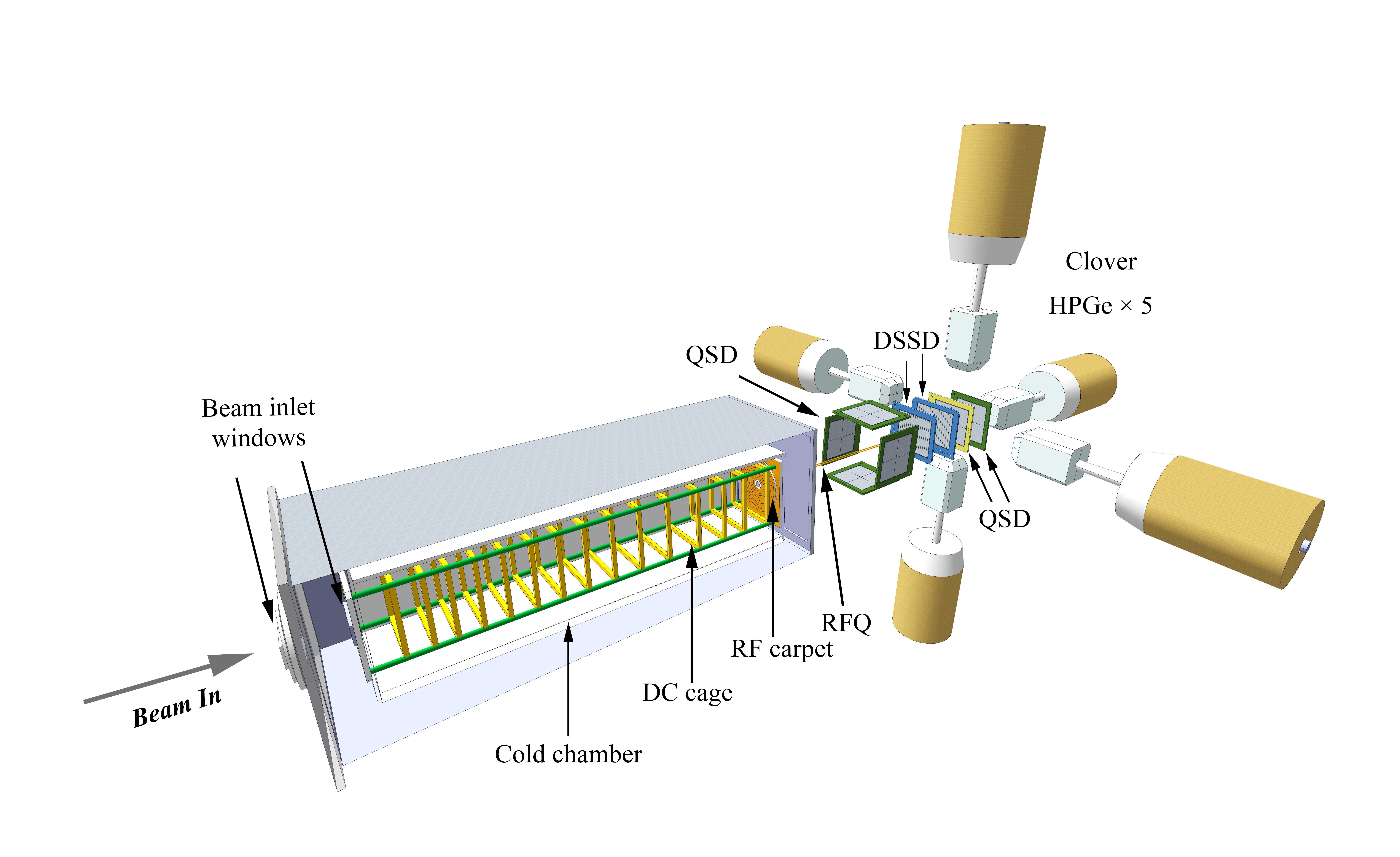
1) The development of the nuclear spectrometers, such as the spectrometer for neutron-rich superheavy nuclide, involving the vacuum technique, cryogenic technique and radio-frequency technique;
2) The development and testing of various types of detectors, such as double-sided silicon strip detectors and HPGe detectors.
Achievements
1. β-decay Half-lives of Neutron-rich Sulfur to Potassium: Evolution of the N = 32 and 34 Subshell Closures below Calcium, Physical Review Letters, 135 (2025) 232501
2. Validation of the 10Be Ground-State Molecular Structure Using 10Be(p, p)6He Triple Differential Reaction Cross-Section Measurements, Physical Review Letters, 131 (2023) 212501
3. Observation of a Strongly Isospin-Mixed Doublet in 26Si via β-Delayed Two-Proton Decay of 26P, Physical Review Letters 129 (2022) 242502
4. New Thermonuclear Rate of 7Li(d,n)24He relevant to the Cosmological Lithium Problem, The Astrophysical Journal, 920 (2021) 145
5. Production of neutron-rich N=126 nuclei in multinucleon transfer reactions: Comparison between 136Xe, Physics Letter B 815 (2021) 136101
6. Advancement of Photospheric Radius Expansion and Clocked Type-I X-Ray Burst Models with the New 22Mg(,p)25Al Reaction Rate Determined at the Gamow Energy, Physical Review Letters, 127 (2021) 172701
7. β-delayed two-proton decay of 27S at the proton-drip line. Physical Review C 103 (2021) L061301.
8. Large Isospin Asymmetry in 22Si/22O Mirror Gamow–Teller Transitions Reveals the Halo Structure of 22Al. Physical Review Letters 125 (2020) 192503.
9. Experimentally well-constrained masses of 27P and 27S: Implications for studies of explosive binary systems, Physics Letter B 892 (2020) 135213.
10. Astrophysical S(E) for the 9Be(p, α)6Li and 9Be(p, d)8Be Reactions by Direct Measurement, The Astrophysical Journal, 893 (2020) 126
11. Fine structure in the decay of 223U, Physics Letter B 800 (2020) 135096
12. New short-lived isotope 223Np and the absence of the Z = 92 subshell closure near N = 126, Physics Letter B 771 (2017) 303
Photos

Contact
Contact: XU Xinxing
Tel: +86-0931-4969167
Email: xinxing@impcas.ac.cn

Copyright © Institute of Modern Physics, Chinese Academy of SciencesAddress:509 Nanchang Rd., Lanzhou 730000, ChinaEmail: office@impcas.ac.cn
陇ICP备2023003351号-1  甘公网安备 62010202000713号


