

Medical Physics Group
Brief Introduction
The Medical Physics Group is dedicated to research on precision radiotherapy based on ion accelerators, including the development of heavy-ion treatment technologies, investigation of heavy-ion treatment mechanisms, and research on radioactive α-nuclide pharmaceuticals.
Since 1995, the group has undertaken the project "Basic Research on Heavy-Ion Cancer Therapy Technology" from the Ministry of Science and Technology of China. It has subsequently received sustained support from the National Natural Science Foundation of China, the Ministry of Science and Technology, the Chinese Academy of Sciences, and Gansu Province. Relying on the Heavy Ion Research Facility in Lanzhou (HIRFL), the group has conducted systematic and in-depth research on heavy-ion therapy technologies and mechanisms, overcoming a series of key core technologies in heavy-ion therapy. It has explored the biological effects and mechanisms of heavy ions from multiple dimensions, as well as novel methods and strategies to enhance the efficacy of heavy-ion radiotherapy, providing essential fundamental data and technical support for clinical heavy-ion therapy.
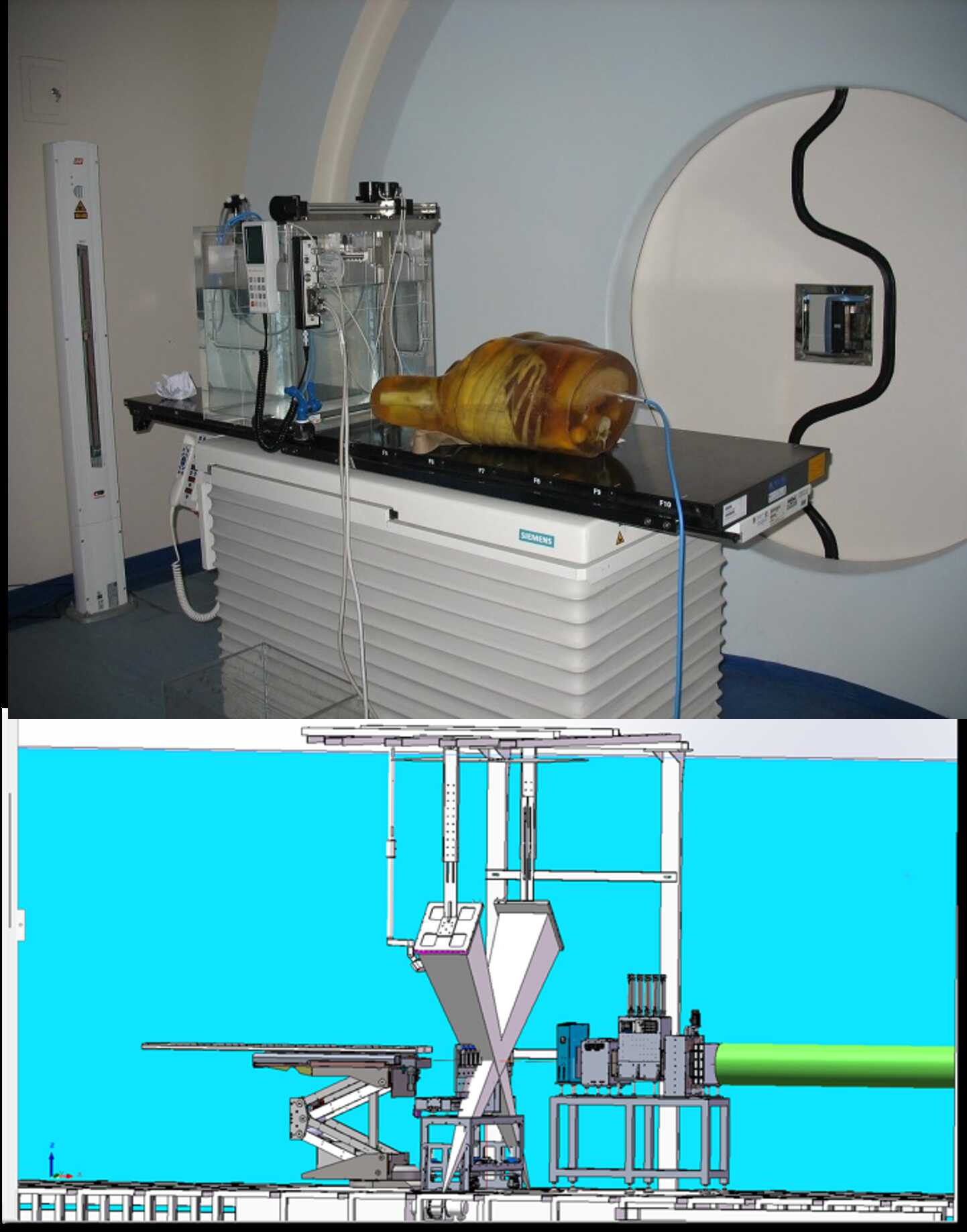
The group has successfully developed the terminal medical system for the heavy-ion medical accelerator and has been responsible for system performance testing and clinical trials. It has progressively achieved a full-chain development process—from acquiring fundamental data and conducting treatment technology research, to preclinical and clinical trials for superficial and deep-seated tumors, and finally to the industrialization and promotion of fully independent intellectual property-based heavy-ion treatment technologies—thereby advancing the clinical translation and application of heavy-ion therapy in China.
Currently, the group continues to focus on the innovative research and development of next-generation heavy-ion radiotherapy technologies, steadily advancing toward greater precision, efficiency, intelligence, and miniaturization. Simultaneously, the group concentrates on the development of α-nuclide-targeted pharmaceuticals and integrated diagnostics and therapeutics. It has established a preclinical evaluation system encompassing targeted probe construction, Ac-225/At-211-based drug preparation, pharmacokinetic analysis, and in vivo efficacy and safety validation, striving to address the challenges in treating metastatic and disseminated malignancies and promoting the clinical translation of highly effective and low-toxicity targeted internal radiation therapies.
Research Fields
1. Heavy ion therapeutic technique
2. Heavy ion therapeutic mechanism
3. Theranostic Radiopharmaceuticals
Achievements
Publications:
1. Rui He, et al. Deep learning-based Monte Carlo dose prediction for heavy-ion online adaptive radiotherapy and fast quality assurance: A feasibility study. Medical Physics, 2025, 52: 2570-2580.
2. Jun Zhang, et al. A novel uniform-spaced fast rescanning method for carbon-ion radiotherapy. Medical Physics, 2025, 52: e17994.
3. Wei Wu, et al. A carbon ion minibeam treatment planning method with scissor beams. Medical Physics, 2025, 52: 3625-3634.
4. Ying Luo, et al. A regularized-multi-field optimization algorithm for robust IMPT. Medical Physics, 2025, 52: e18046.
5. Guangru Li, et al. Combining IMPT and spot-scanning hadron arc to efficiently boost dose and LET in hypoxic target volumes. Medical Physics, 2025, 52: e70176.
6.Yuanyuan Ma, et al. A machine learning-based approach to predict energy layer for each field in spot-scanning proton arc therapy for lung cancer: A feasibility study. Medical Physics, 2024;51:4970–4981.
7. X. Zhang, et al. Deep learning-based fast denoising of Monte Carlo dose calculation in carbon ion radiotherapy, Medical Physics,2023, 50:16719.
8. Yuanyuan Ma,et al. Deep learning-based internal gross target volume definition in 4D CT images of lung cancer patients. Medical Physics, 2023,50:2303-2316.
9. P. He, et al. Effectiveness of respiratory-gated radiotherapy with audio-visual biofeedback for synchrotron-based scanned heavy-ion beam delivery, Physics in Medicine and Biology, 2016, 61:8541-8552.
10. P. He, et al. Respiratory motion management using audio-visual biofeedback for respiratory gated radiotherapy of synchrotron-based pulsed heavy-ion beam deliver, Medical Physics, 2014,41:111708.
11. Guo Y, et al. Unraveling the dual nature of FLASH radiotherapy: From normal tissue sparing to tumor control. Cancer Lett. 2025;630:217895.
12. Gao F, et al. Electron-beam FLASH whole brain irradiation induced a unique changes of intestinal flora. Mol Med. 2025;31(1):165.
13. Li H, et al. Doxorubicin-loaded PEGylated liposome modified with ANGPT2-specific peptide for integrative glioma-targeted imaging and therapy. Mater Today Bio. 2025;30:101455.
14. Tian H, et al. 10-Hydroxycamptothecin-Loaded Hollow Mesoporous Polydopamine Modified with ANGPT2-Specific Peptide for Gastric Cancer-Targeted Therapy. J Med Chem. 2025;68(18):19673-19687.
15. Lei, H, et al.Tau post-translational modifications in Alzheimer's disease: Insights into pathogenesis, therapeutic strategies, and diagnostic advances. Ageing Research Reviews. 2026, 113: 102927.
16. Cheng W, et al. Effects of cranial X-ray irradiation in Presymptomatic 3 × Tg-AD mice. Exp Neurol. Published online September 23, 2025.
17. Gao Y, et al. mtDNA/RNA boosts radiation-induced abscopal effect via M1 macrophage polarization-promoted IFN-β-dependent inflammatory response. Int Immunopharmacol. 2025;155:114673.
18. Ma G, et al. Modulating systemic anti-inflammatory response mitigates osteoarthritis progression and associated pain after low-dose radiotherapy. Int Immunopharmacol. 2025;158:114815.
19. Dou Z, et al. Modification of BCLX pre-mRNA splicing has antitumor efficacy alone or in combination with radiotherapy in human glioblastoma cells. Cell Death Dis. 2024;15(2):160.
20. Shi Z, et al. Feedback loop between hypoxia and energy metabolic reprogramming aggravates the radioresistance of cancer cells. Exp Hematol Oncol. 2024;13(1):55.
Patents:
1. 一种离子束快速扫描照射系统,2025
2. 一种基于纳剂量学量加权剂量优化的离子辐照方案设计方法.2025
3. 靶向脑胶质瘤的多肽及放射性核素标记分子探针的制备与应用,2024
4. 一种多相位4D CT图像分割方法及系统,2024
5. 一种智能型的离子束自适应放疗系统、存储介质及设备,2024
6. 一种四维剂量计算系统及存储介质,2022
7. 三维图像引导摆位的方法、系统、处理设备及存储介质,2022
8. 微分同胚Demons图像配准方法、系统及存储介质, 2021
9. 基于纳剂量学获得离子束辐照方案的方法, 2020
10. 一种用于放射治疗中患者摆位的实时验证装置及方法, 2019
11. RESPIRATORY GUIDANCE AND METHOD APPLIED IN RESPIRATORY-GATED ION BEAM IRRADIATION,2019,美国发明专利
12. RESPIRATORY GUIDING DEVICE AND METHOD IN RESPIRATORY GATING ION BEAM IRRADIATION,3184147, 2018,欧洲发明专利
13. 离子束呼吸门控治疗中的呼吸引导装置及方法,2018
14. 基于水等效系数的离子束放射治疗剂量验证方法,2018
15. 重离子放射治疗多功能三维适形调强装置及方法,2017
16. 快速获得免冲洗验证胶片剂量响应曲线的装置和方法,2017
17. 一种模拟离子束射野的平行光野指示装置及方法, 2017
18. 放射治疗中动态肿瘤靶区的定位装置及其方法, 2016
19. 一种利用高能离子束辐照时减小离子束展宽Bragg峰后沿剂量半影的方法
20. 重离子束对肿瘤靶区的三维适形照射装置,2010
Awards:
1. National Innovation Award in 2023
2. Grand prize of the Gansu Provincial Science and Technology Progress Award in 2022
3. Award for excellent Chinese invention patents in 2011
4. First class prize of the Gansu Provincial Science and Technology Progress Award in 2009
Photos
Contact
Contact: LI Qiang
Email: liqiang@impcas.ac.cn

Copyright © Institute of Modern Physics, Chinese Academy of SciencesAddress:509 Nanchang Rd., Lanzhou 730000, ChinaEmail: office@impcas.ac.cn
陇ICP备2023003351号-1  甘公网安备 62010202000713号


