

Ultrafast Dynamics in Extreme Fields Group
Brief Introduction
Our group is dedicated to pioneering research in atomic and molecular physics, with a focus on collision and dissociation dynamics involving highly charged ions, electrons, and XUV lasers interacting with atoms, molecules, and clusters. We also explore applications of atomic and molecular processes in interdisciplinary fields such as astrophysics and radiation biology.
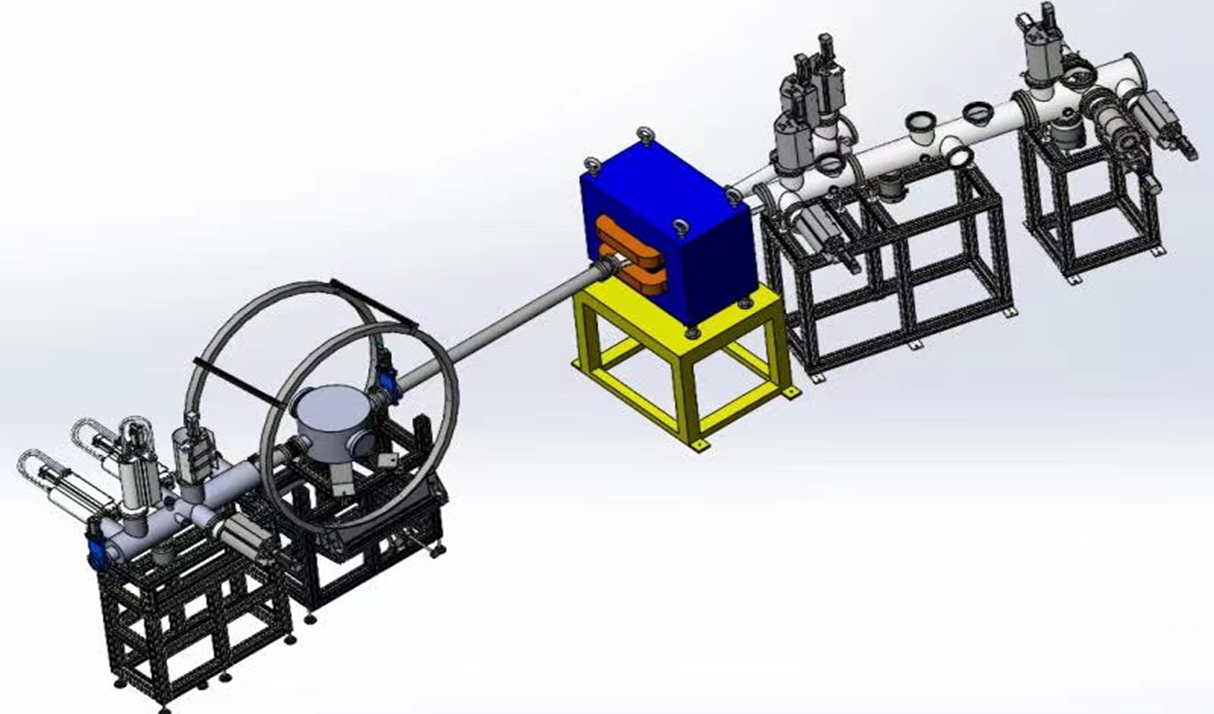
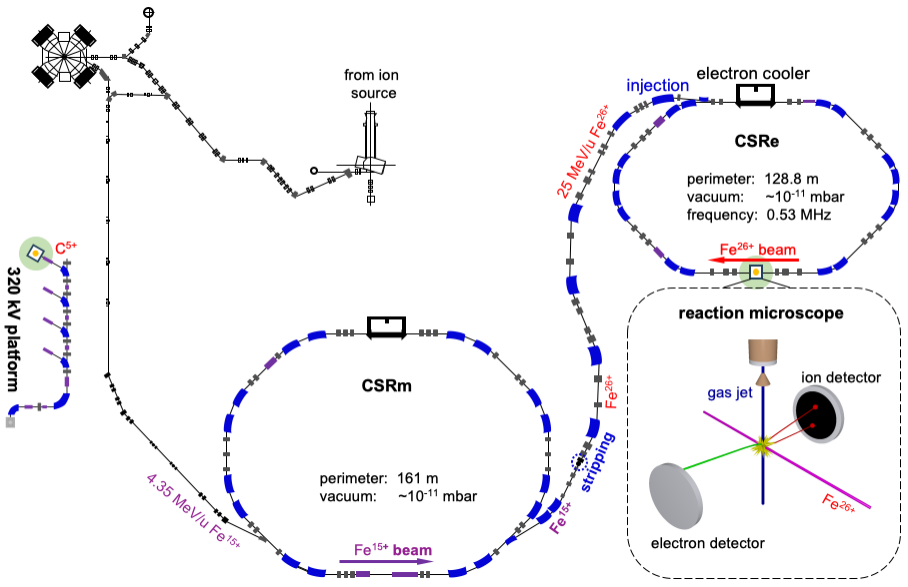
The group currently comprises 5 research faculty, 4 associate research faculty, and 2 postdoctoral researchers. Based on heavy-ion accelerators and cooling storage ring facilities, we have independently developed multiple advanced experimental endstations. To date, we have published over 150 SCI-indexed papers in high-impact international journals, including Physical Review Letters. Looking ahead, the High Intensity heavy-ion Accelerator Facility (HIAF) in Huizhou will open up new frontiers in collision dynamics research, enabling explorations of relativistic collisions, quantum information, and high-field quantum electrodynamics (QED) tests.
We maintain close academic collaborations with leading research groups worldwide, including GSI Helmholtzzentrum für Schwerionenforschung (Germany), Max Planck Institute for Nuclear Physics (MPIK, Germany), Heinrich Heine University Düsseldorf, Heidelberg University, Missouri University of Science and Technology (USA), the French National Centre for Scientific Research (CNRS), and the Grand Accélérateur National d’Ions Lourds (GANIL, France). Joint supervision of graduate students is actively conducted within these international partnerships.
Research Fields
1. Dynamics in ion-atom/molecule collisions
2. Atomic and Molecular Processes in Astrophysics
3. Biological effects of heavy-ion irradiation
4. Quantum Information
Achievements
[1] Phys. Rev. X 15, 011053 (2025)
Damaging Intermolecular Relaxation Processes Initiated by Heavy-Ion Irradiation of Hydrated Biomolecules
[2] Phys. Rev. Lett. 133, 193002 (2024)
Coulomb Explosion Imaging of Complex Molecules Using Highly Charged Ions
[3] Phys. Rev. Lett. 133, 173002 (2024)
Direct Evidence of Breakdown of Spin Statistics in Ion-Atom Charge Exchange Collisions
[4] Phys. Rev. Lett. 131, 253001 (2023)
Molecular Ionization Dissociation Induced by Interatomic Coulombic Decay in an ArCH4-Electron Collision System,
[5] Nat. Commun. 11, 2987 (2020)
Heavy N+ ion transfer in doubly charged N2Ar van der Waals cluster
[6] Angew. Chem. Int. Ed. 57, 17023 (2018)
Damaging Intermolecular Energy and Proton Transfer Processes in Alpha-Particle-Irradiated Hydrogen-Bonded Systems
[7] Phys. Rev. Lett., 112, 023201 (2014)
Two-Center Interferences in Dielectronic Transitions in H2+ + He Collisions
First Prize of Gansu Provincial Natural Science, New Mechanisms in Molecular and Cluster Dissociation Induced by Collision Ionization Processes, 2024
Photos

Contact
Contact: ZHANG Shaofeng
Tel: 09314969349
Email: zhangshf@impcas.ac.cn

Copyright © Institute of Modern Physics, Chinese Academy of SciencesAddress:509 Nanchang Rd., Lanzhou 730000, ChinaEmail: office@impcas.ac.cn
陇ICP备2023003351号-1  甘公网安备 62010202000713号


